

The Sisters Adorers of the Precious Blood, an enclosed, contemplative community also known as the “powerhouse of prayer” for the Brooklyn diocese and the world, have been based at the Precious Blood Monastery on Fort Hamilton Parkway in Brooklyn since 1910. The Sisters Adorers of the Precious Blood were established in 1861 by Mother Catherine Aurelia of the Precious Blood in Quebec, Canada. They worship the blood of Christ and pray for God’s mercy for the world. For more information on how the sisters arrived in Brooklyn and how monasteries were erected in the city, visit brooklyn-future.com.
Establishment of the order
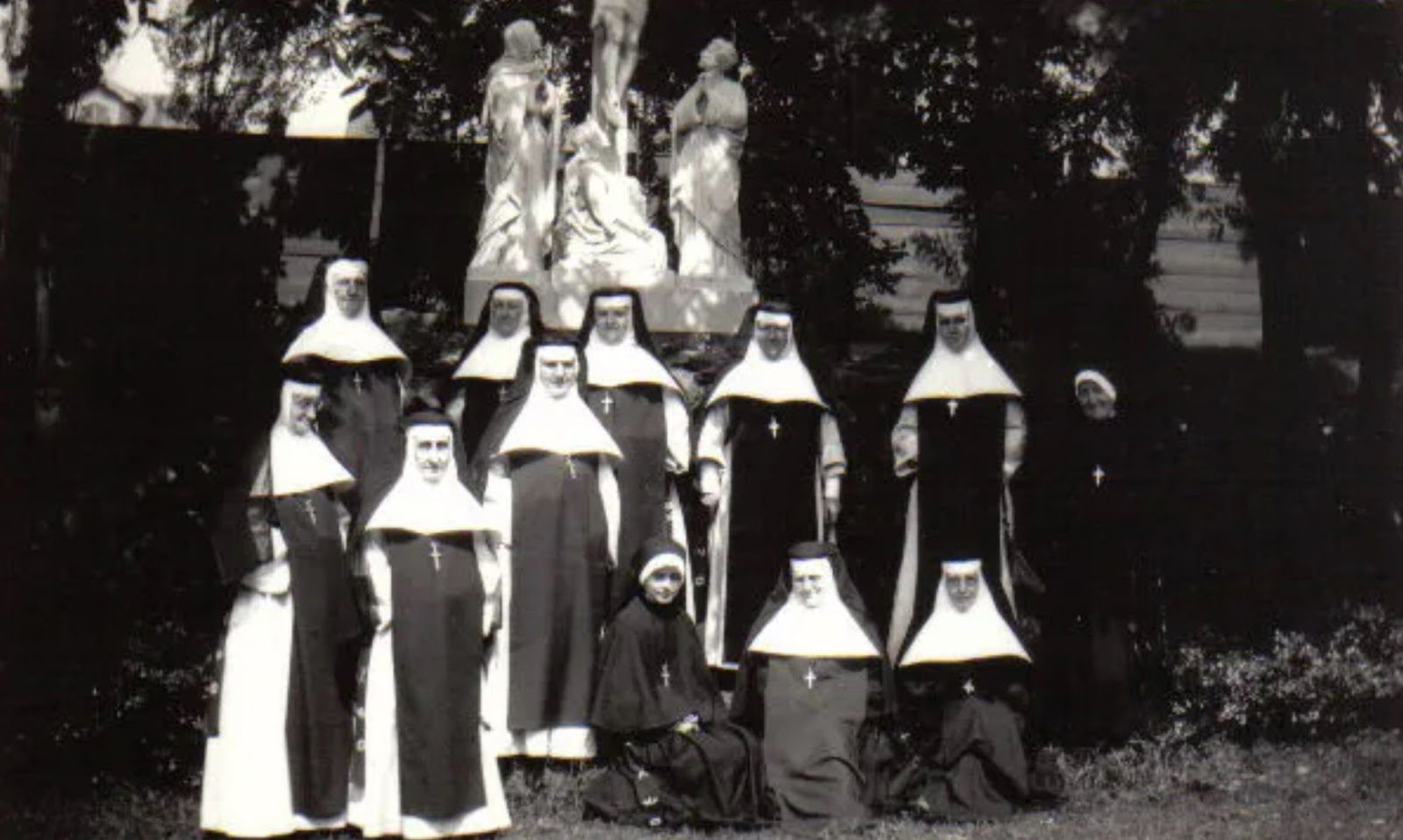
The Sisters Adorers of the Precious Blood were the first contemplative community established in Canada. Catherine Aurelia of the Precious Blood (Caouette), the founder, began her work in the diocese guided and assisted by Bishop Joseph La Rocque of Saint-Hyacinthe, Quebec, in September 1861. Catherine Aurelia delved deeply into the Paschal Mystery. The contemplation of God’s infinite love, as shown in Christ’s passions and death, gave her a special admiration for his Precious Blood. Her spirituality stemmed from the Savior’s blood, which represented his love and victory over suffering. She regarded it as a sign of his unappreciated love and the gift of salvation, both of which were rejected by many.
Consequently, the small community that began with four women devoting their lives to monastic prayer and contemplation grew quickly, and the order’s first base was founded in Toronto, Ontario, in 1869. The congregation’s English-speaking center opened in London, Ontario. The main house of the French-speaking congregation was in St. Hyacinthe, Quebec. The order expanded rapidly and dynamically, and by 1887, it had four monasteries across Canada. Later in October 2011, the sisters received permission from Rome to convert the congregation into an autonomous monastery.
Arriving to Brooklyn
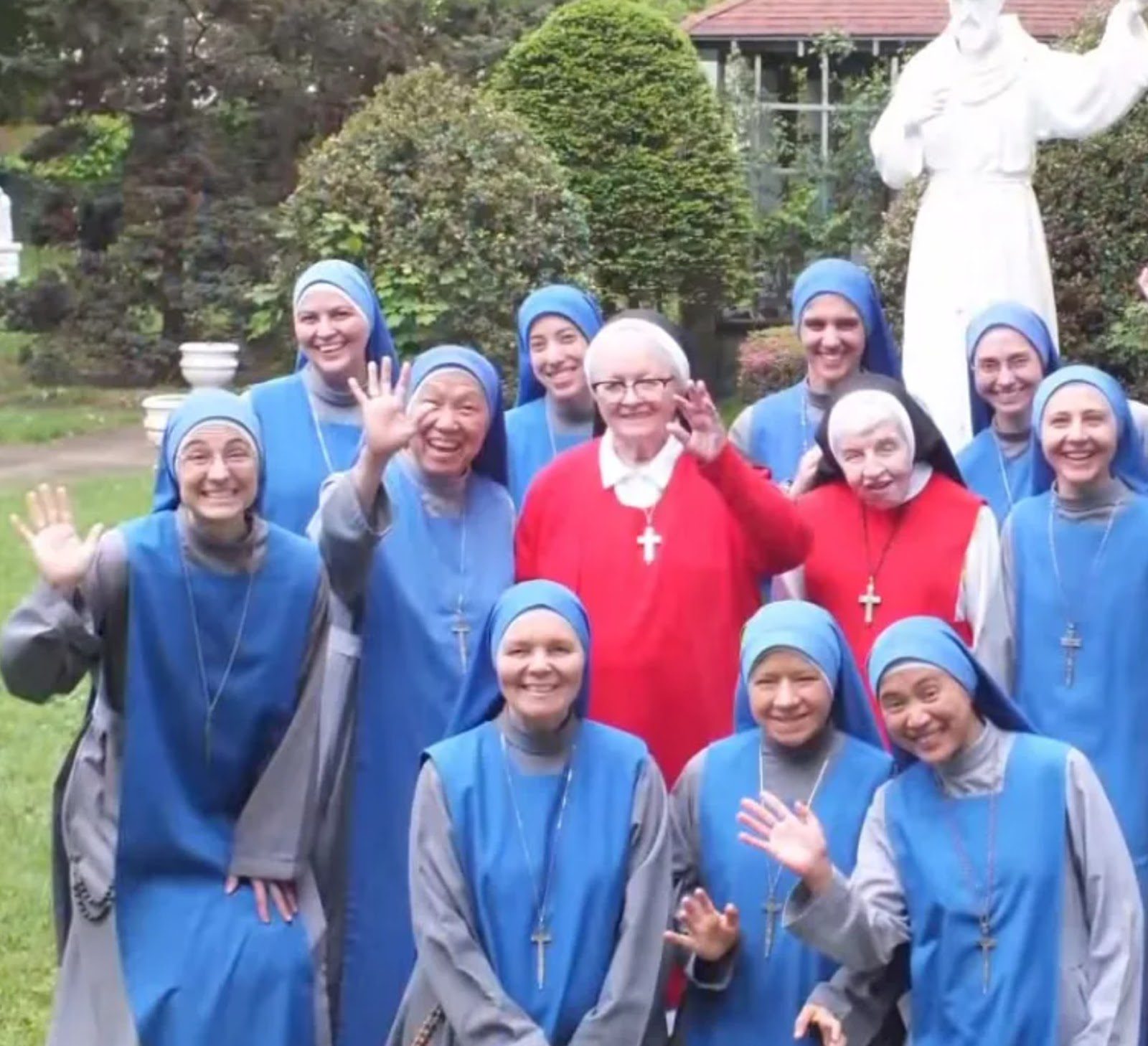
The Sisters Adorers of the Precious Blood arrived in the United States, namely Brooklyn, in 1890, at the request of Bishop John Loughlin. He gave his permission as one of his final acts before his death, and a small group of nuns relocated to a modest house on Sumpter Street, today known as Ocean Hill. Initially, the sisters settled here.
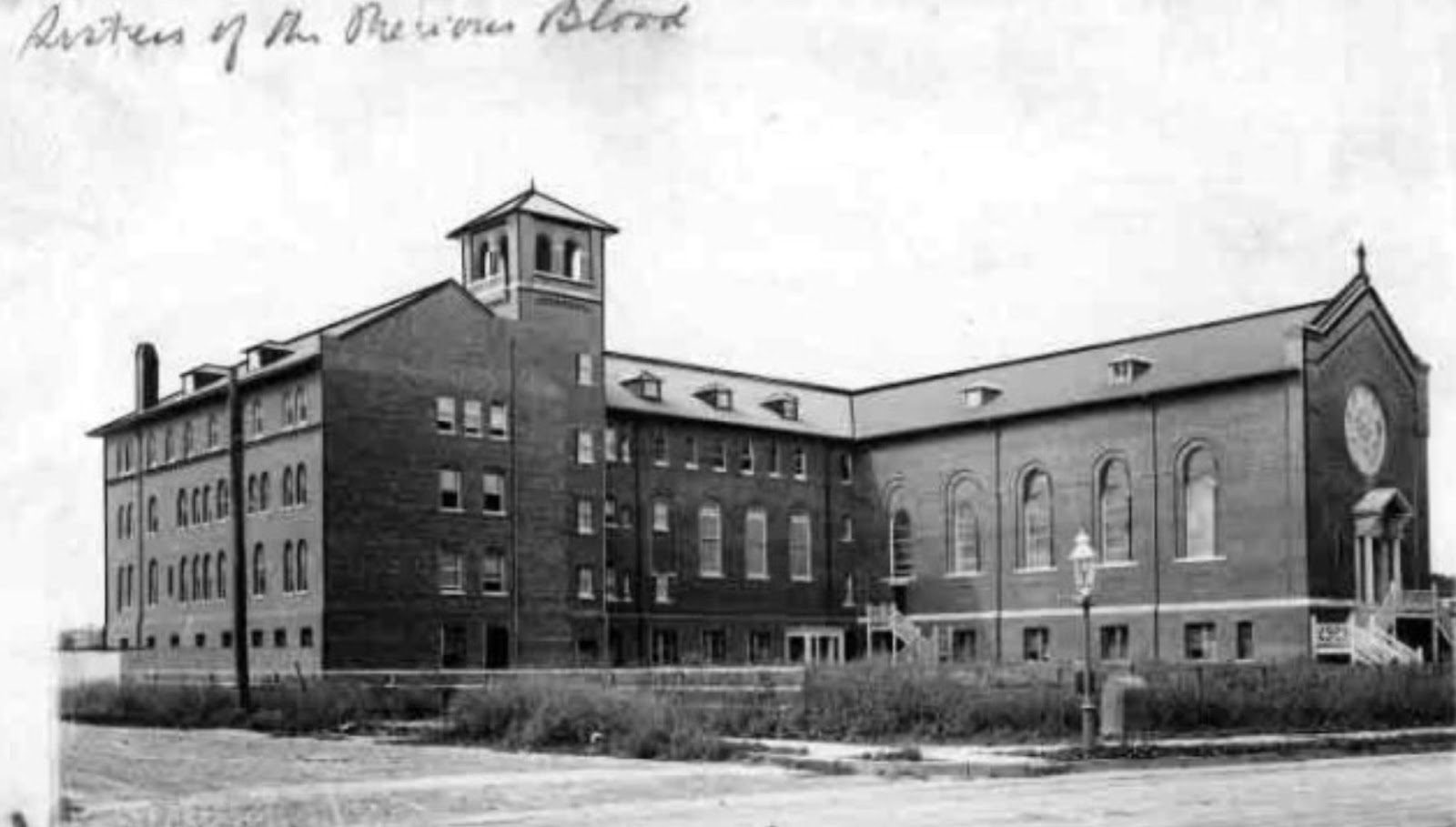
The order expanded, and the sisters required more space. With the assistance of faithful Catholics in Brooklyn and the diocese, the nuns were able to construct a new building for themselves on four plots facing 212 Putnam Avenue. Rudolfe L. Daus, a notable Brooklyn architect who was also a Catholic, was chosen to design the project. At the time, he had already completed several other projects for the faithful, such as the large house for the St. John’s Home for Boys on St. Marks Avenue and Our Lady of Lourdes Church.
He also designed the 13th Regiment Armory, located just a few blocks away, a telephone building in the city center, as well as many distinctive residential buildings, hospitals and commercial and public spaces. Rudolfe L. Daus possessed a wealth of experience, as seen by his professional record.
Construction of the first monastery
A fundraising campaign was launched for the construction of the monastery. The nuns received unexpectedly significant public support, both from Catholics and non-Catholics. This could have been due to their reserved and humble demeanor, but it could also have been due to their characteristic red habits or their intense devotion to the blood of Jesus and his suffering. Anyway, the sisters were the most well-liked nuns in Brooklyn.
Rudolfe Daus’ wife assisted in fundraising efforts, as well as hosting and organizing various fundraising events. She and her friends planned fairs and charity concerts, and all proceeds went toward construction. Parishes throughout Brooklyn launched their own fundraisers or arranged special gatherings for the monastery. Even after the structure was built, the monastery was frequently supported through donations. It still required money, as the majority of the nuns never left the monastery walls.
When you look at the monastery project, you can clearly see how seriously the sisters took the construction. For example, the area was encircled on three sides by a 12-foot-high brick wall. The monastery’s front was the only part of it that was open to the street. During their stay on Putnam Street, the order welcomed many newcomers from Brooklyn and hosted weekend retreats for the faithful.
When the construction was finished, the sisters had an open day and fair, which was uncommon for a monastic order. In fact, the sisters of the order wanted people to know where their money had gone, whether there was still a need for funds and for what purposes. It was also a kind of an open day for potential future nuns and anyone else who was curious about how they lived and what life would be like behind the walls. The fair lasted ten days. Visitors could tour the institution and see chapels, cells where nuns lived, a dining room, a common room, kitchens, a refectory, a novitiate, a laundry room and an infirmary. After the fair finished and the building was dedicated, the gates were closed, then locked and the nuns inside began their monastic life.
It was all quite serious since even the respected local newspaper, the Brooklyn Eagle, announced that the Monastery of Precious Blood would be closing its doors to guests. However, there were so many people who wanted to attend the nuns’ fair and the monastery’s open day that they had to extend these events by several days. Around a year later, despite the monastery’s gates being closed, the construction of the chapel was completed. On this occasion, the sisters decided to hold a public mass, therefore the monastery’s gates were briefly opened.
New Harvard brick monastery
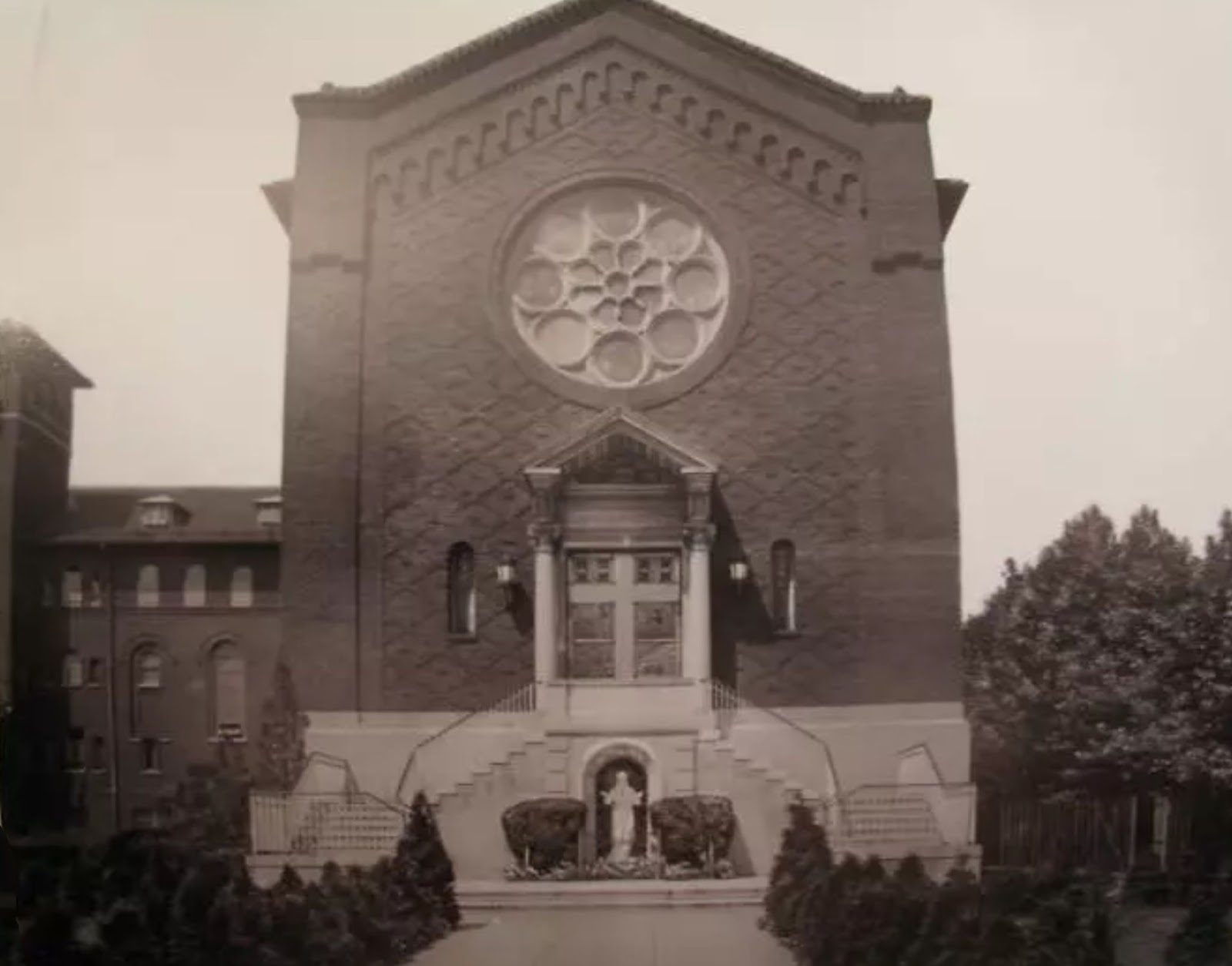
Over the next few years, despite the fact that the territory of the monastery was closed, the chapel continued to hold weekly public masses and was occasionally utilized for concerts. The attendants were accustomed to seeing the sisters in their blood-red habits, who slipped out of their seats and faded back into their isolated world without saying a word.
However, by 1908, the Monastery of Precious Blood had outgrown its current place of residence. It was necessary to relocate again, this time a little further away from highly populated areas to the new monastery, which was located on Fort Hamilton Parkway, between 51st and 52nd Streets in Borough Park. Actually, the sisters bought property in the area in 1905. Following that, construction on the second monastery began. As a result, supporters of the order resumed fundraising efforts, receiving donations from all Catholic organizations and societies in Brooklyn, particularly those for women. In 1910, the order ultimately settled in Kings County.
The construction of the new structure was completed toward the end of 1908. It was designed by the Manhattan firm Reilly & Steinback. The building was built using Harvard brick, limestone and granite. When it was dedicated and the order moved in in 1910, the construction work was nearly complete. The monastery is still located there as it is a beautiful spacious building in a great location.