

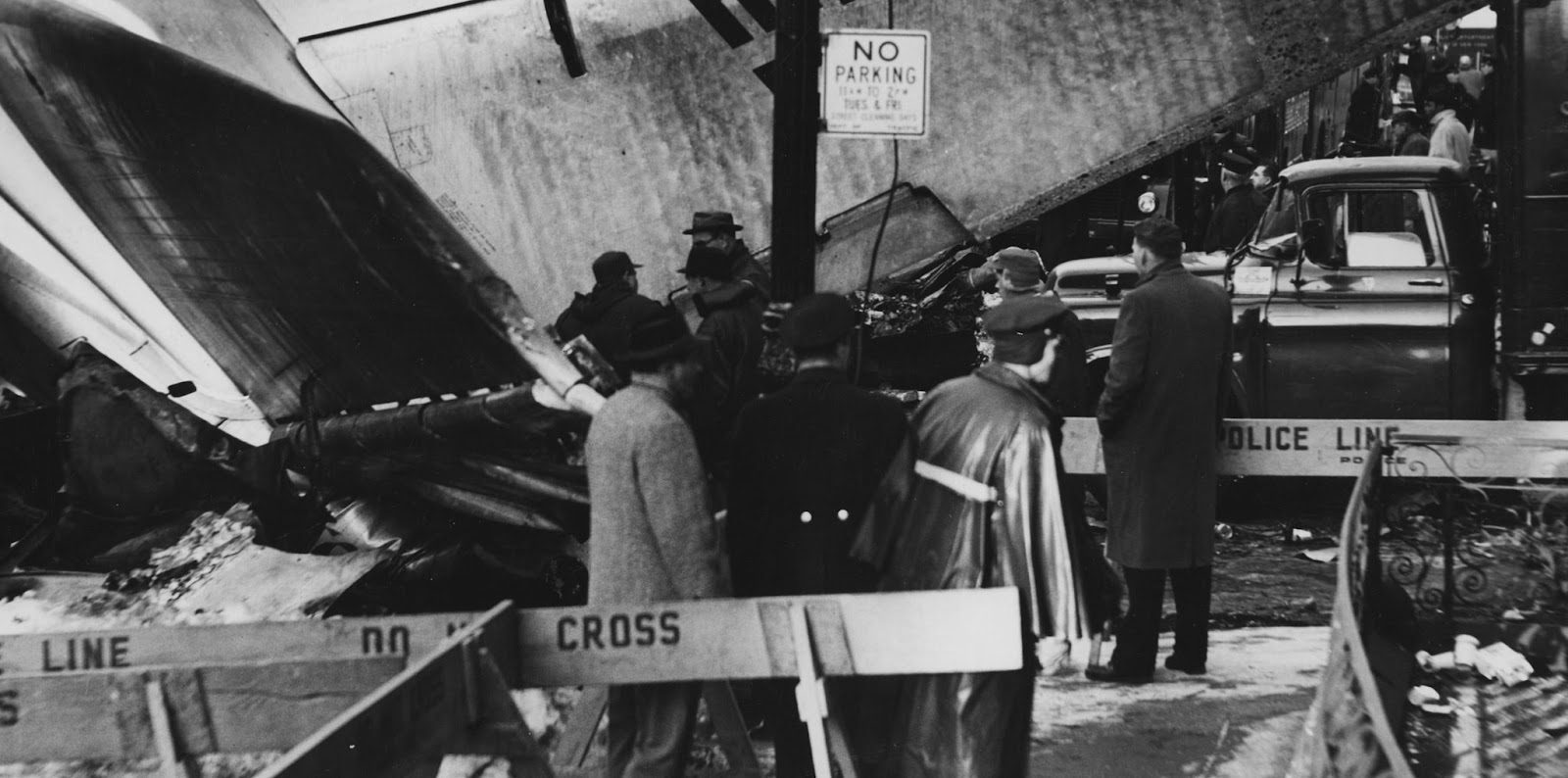
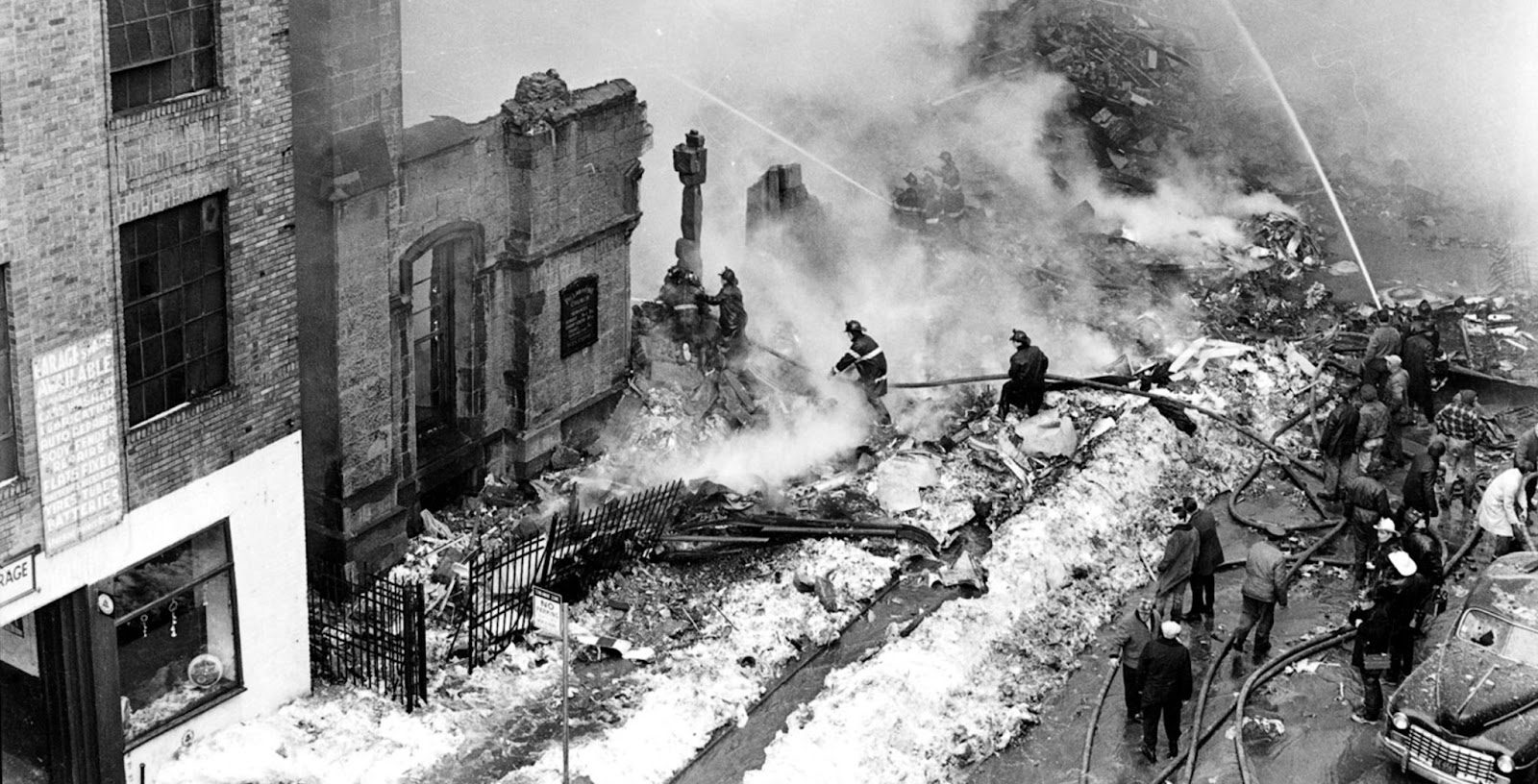
On December 16, 1960, an American Airlines plane crashed into a residential area in Brooklyn, causing a massive fire that spread across several blocks. Authorities, firefighters and emergency officials all arrived at the site of the tragedy. As it turned out, the plane crashed into the Fire Church, completely destroying it. Journalists stated that there were 77 passengers on the aircraft, almost all of whom died. It was also reported that a boy named Stephen Baltz miraculously survived this awful calamity. In addition, journalists reported about another man who allegedly suffered severe burns but may have survived. According to witnesses to the plane crash, the scene of the crash resembled a battle zone. Newspapers also wrote that it was fortunate that the craft did not hit two gas stations near the demolished church since the fire and destruction would have been far more devastating. Learn more about the tragic plane crash in Brooklyn at brooklyn-future.com.
The tragic story of Stephen Baltz
Later that day, United Air Lines Flight 826, a Douglas DC-8 jet airliner, and Trans World Airlines Flight 266, a Lockheed L-1049 Super Constellation, collided at 10:33 a.m., around 1,585 meters above Staten Island, New York. The Lockheed crashed close to the point of collision, at the former Miller Army Air Field, while the DC-8 continued northeast until it crashed in Brooklyn.
All 128 passengers aboard both planes died in the crash. In addition, six people fell victim on the ground. Despite this, as if thanks to a miracle, a 10-year-old boy who was flying in the DC-8 survived the accident. However, he passed away the next day as a result of inhaling a lot of burning aviation fuel fumes.
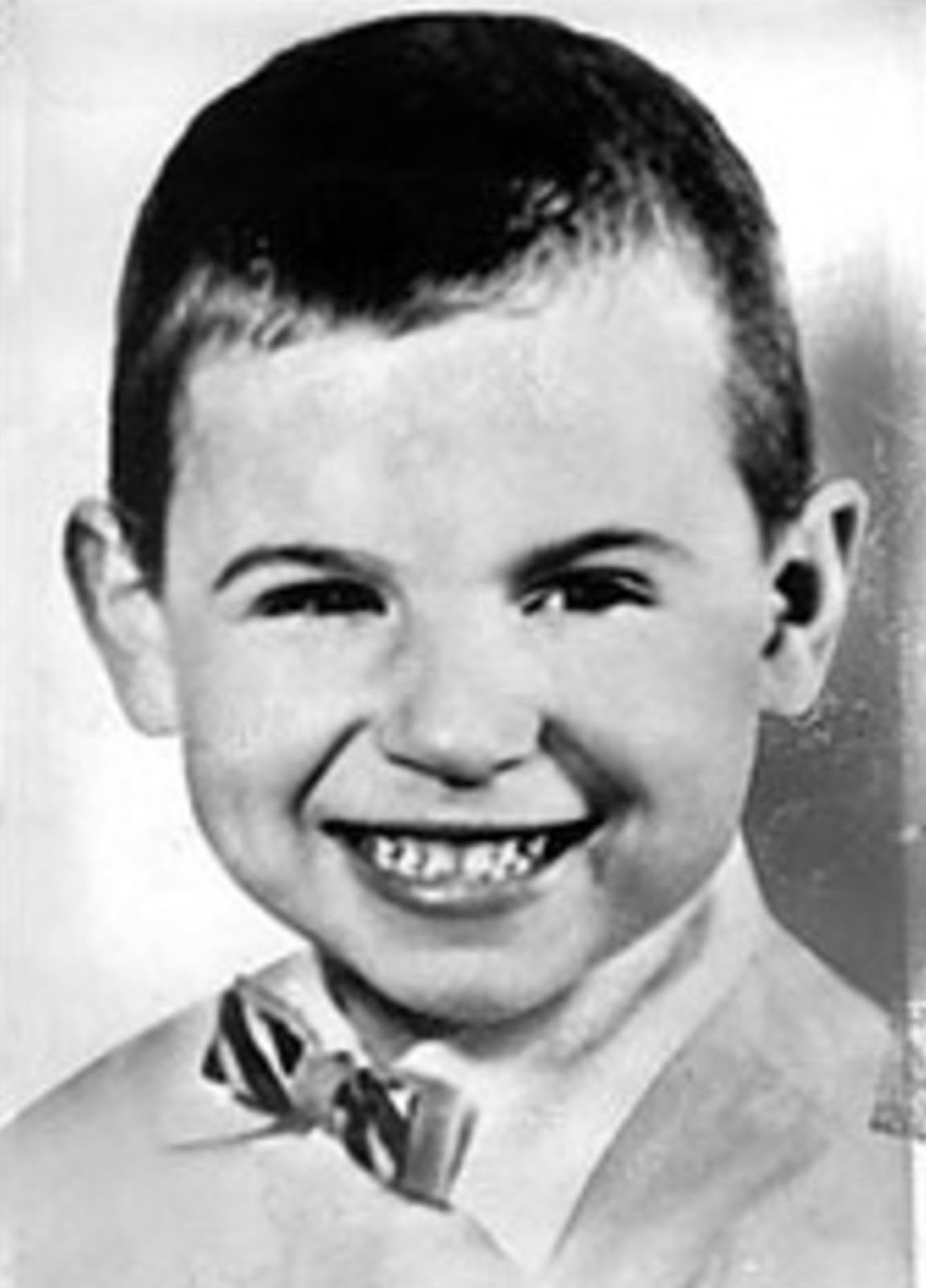
The 10-year-old boy’s name was Stephen Baltz. He was flying alone, but in Yonkers, the boy was supposed to meet up with his family. Stephen miraculously survived after falling from a height of more than 1.5 kilometers, although he was seriously injured. Residents of Brooklyn rushed to his rescue, as his clothing was on fire.
The boy who was on fire was rolled into the nearest snowdrifts to extinguish his clothes. Stephen was then brought to a nearby Methodist Hospital in New York, but the miracle did not occur, he died the following day. Now, in Brooklyn, there is a little memorial in the hospital chapel. The memorial plaque shows 65 cents in different coins, which was pocket money that Stephen Baltz had with him that day. The plaque’s inscription states that it is a tribute to Stephen Baltz in memory of the 135 people killed in a plane crash in Brooklyn, New York on December 16, 1960. “Our Tribute to a Brave Little Boy.”
Nothing foretold trouble
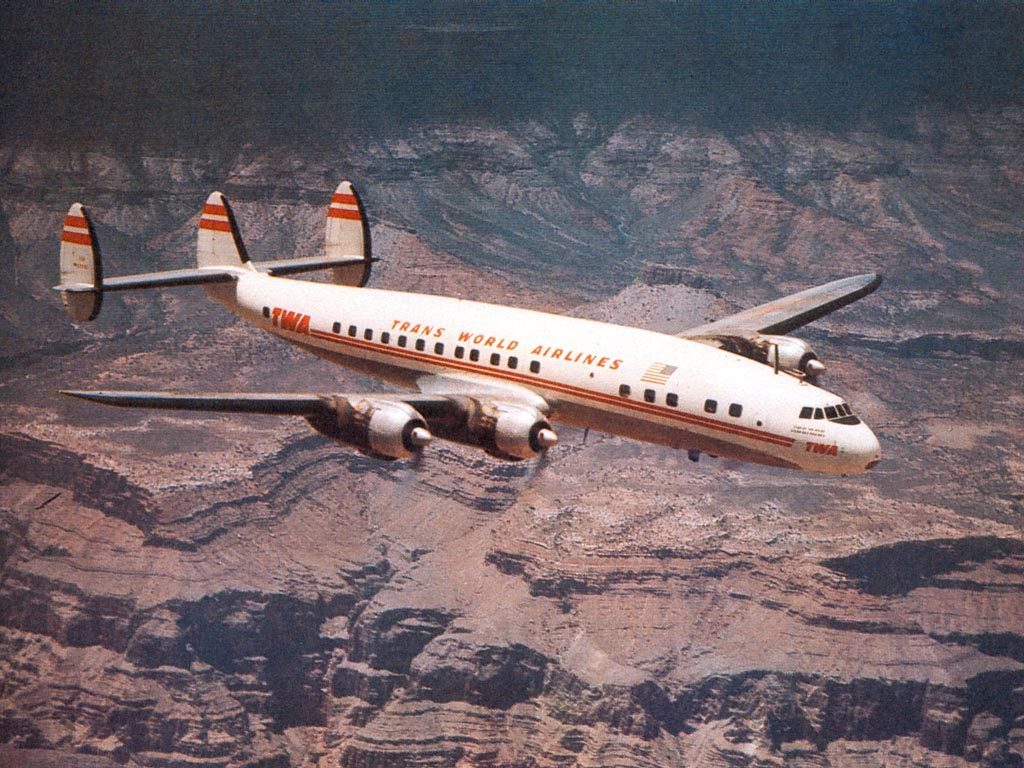
TWA Flight 266 took off from Dayton, Ohio, and made an intermediate stop in Columbus. The Super Constellation took off from Port Columbus Airport at 9:00 a.m., heading to La Guardia Airport in New York City. The crew was led by Captain David Arthur Wollam, a TWA veteran with fifteen years of experience and 14,583 hours of flight. First Officer Dean T. Bowen and Second Officer, Flight Engineer LeRoy L. Rosenthal, completed the crew. There were also two flight attendants on board: Margaret Gernat and Patricia Post. The flight carried 39 passengers.
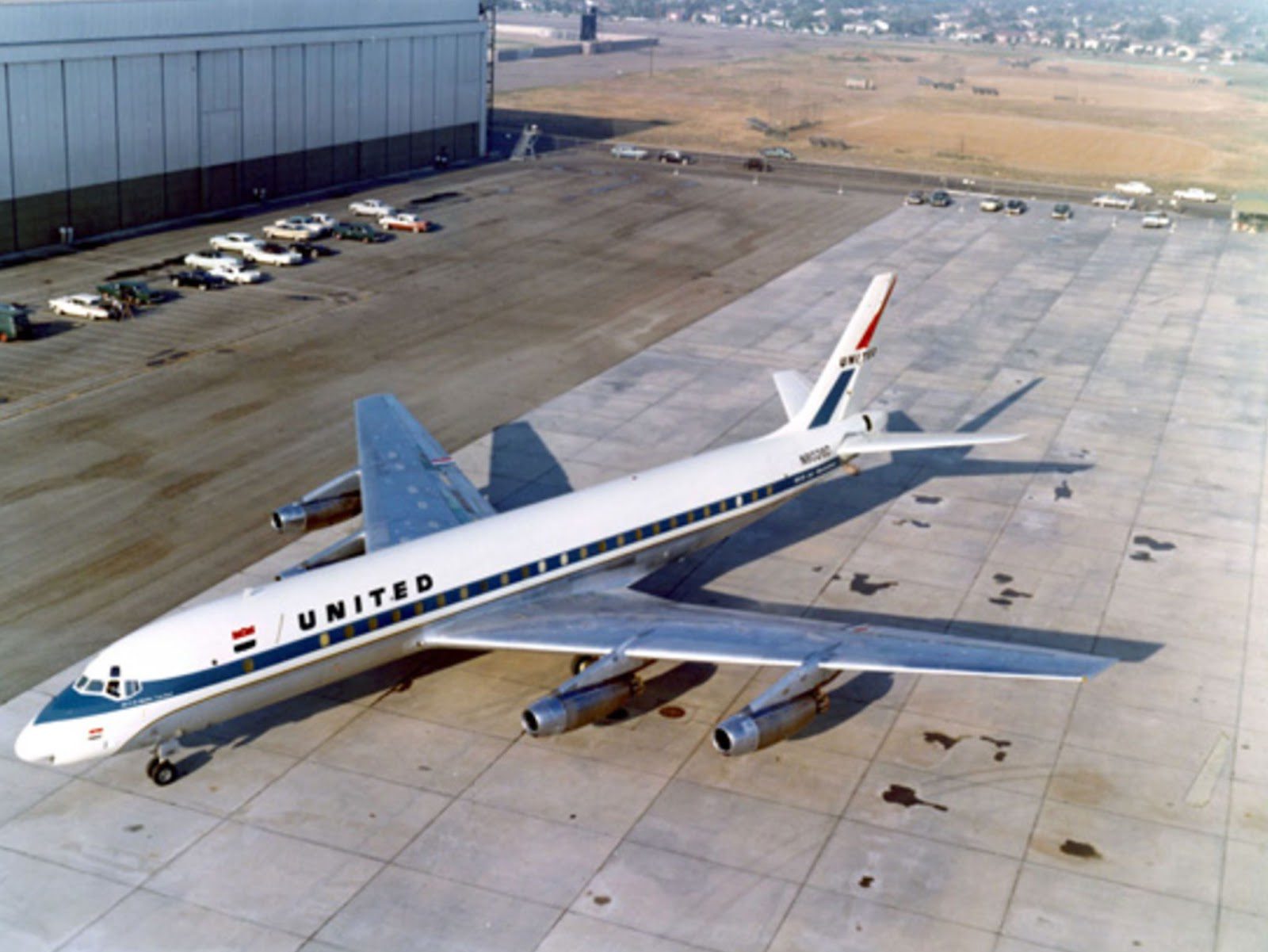
The second UAL Flight 826 flew nonstop from O’Hare Airport in Chicago, Illinois, to New York International Airport (now known as John F. Kennedy International Airport). Captain Robert H. Sawyer served as the commander. During his 19 years with United, he accumulated 19,100 flight hours, including 344 on the new DC-8 jet airliner. First Officer Robert W. Flebing served as co-pilot, while Second Officer Richard E. Pruitt was the flight engineer. There were four flight attendants on board, including Mary J. Mahoney, Augustine L. Ferrar, Anne M. Bouthen and Patricia A. Keller. The crew took off from Los Angeles, California, at 3:20 a.m. and landed in Chicago at 6:56 a.m., where they remained for two hours. Following that, the airliner took off from Chicago at 9:11 a.m., carrying 76 passengers.
Causes of the plane crash
Both airliners followed instrument flight regulations and flew along a series of air routes defined by the Very High Frequency Omnidirectional Ranges (VORs) system. It included ground radio stations as well as radar services provided by Air Traffic Control Centers and Approach Control facilities.
On approach to LaGuardia Airport, Flight 266 was under the direction of New York Center and LaGuardia Approach Control. Flight 826 was also under the direction of New York Center, but the approach to Idlewild was coordinated by a local dispatcher. At 10:27 a.m., radar dispatchers from New York Center “handed over” Flight 266 for landing to the LaGuardia colleagues. The center then gave Flight 826 permission to land at the PRESTON Intersection and instructed them to wait there. It then redirected Flight 826 to Idlewild Approach at 10:33 a.m.
Yet, at 10:21 a.m., the crew of United Flight 826 informed the dispatcher service that the second VOR receiver was out of order. The regulations still allowed for navigation with a single VOR receiver, However, it became more difficult because the operator had to continuously switch radio frequencies between the two VOR stations and reconfigure the device according to changes in the radials of the two ground stations.
On the other hand, the significantly higher speed of the new jet airliner did not allow the crew enough time to make the required continuous changes. When LaGuardia instructed Flight 266 to make a series of small right hand turns before landing on the runway, the Super Constellation was flying over Staten Island.
Following that, air traffic controllers at LaGuardia Airport observed two radar targets merging. One of them continued northwest, while the other remained stationary before making a slow right turn and disappearing off radar. When the collision occurred, the Super Constellation was in a slight left bank. The DC-8 was flying straight and level at a speed of 480 kilometers per hour.
It collided with the L-1049a from the right rear, and its fourth engine penetrated the passenger compartment, tearing off the right wing between the third and fourth engines. The fuselage of the Lockheed broke into three pieces and caught fire. The crash severely damaged the DC-8, and the right-wing suspension section and fourth engine were later discovered amid the wreckage at Miller Field Air Field. The jetliner flew about 15 kilometers before crashing into a residential area of Brooklyn.
Implications for Brooklyn
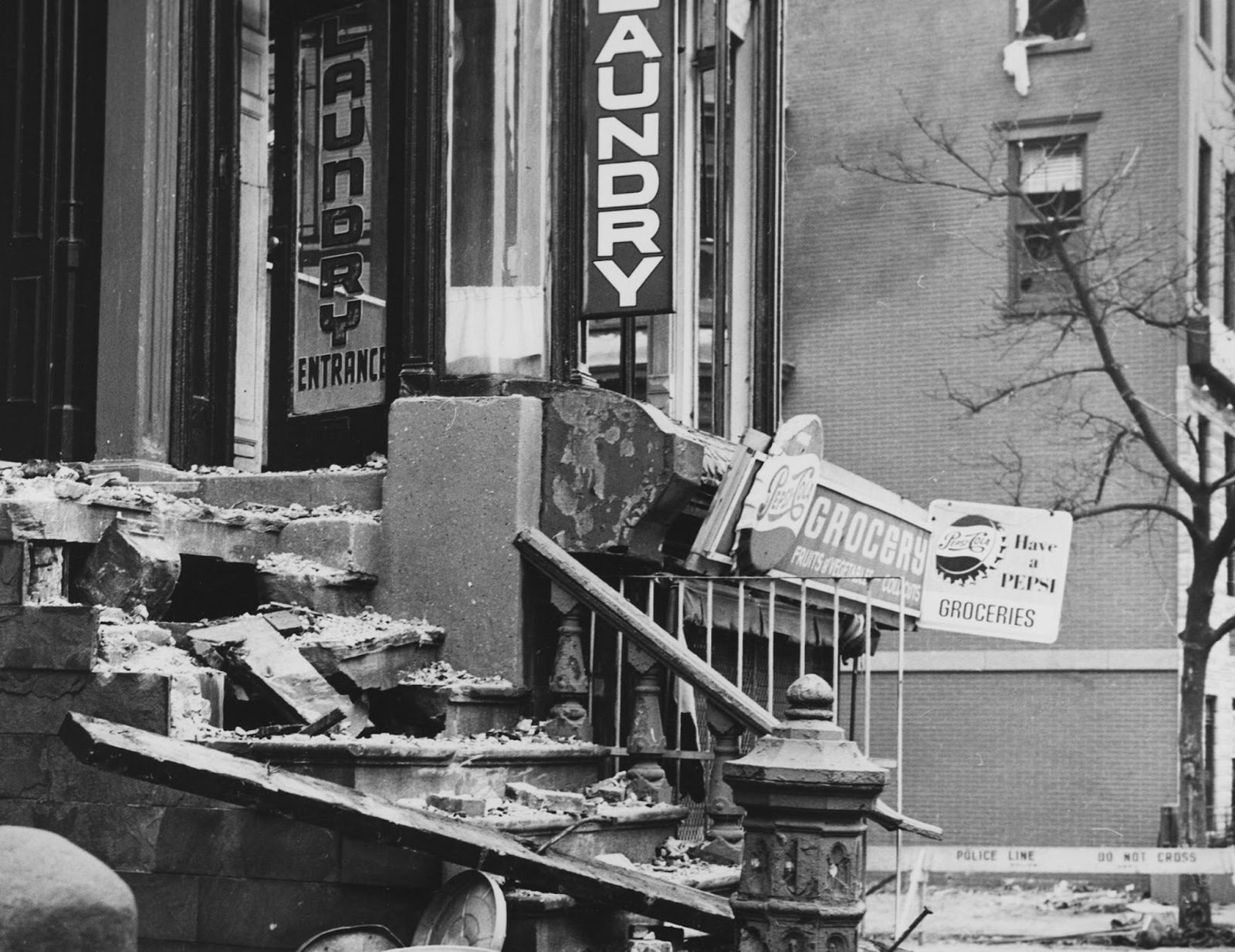
The plane left a large trench that went down Sterling Place, setting fire to ten houses, the Fire Church, McCaddin Funeral Home, a laundry facility and a deli. Six people who were on the ground at the time also died. As a result, eighty-three of the eighty-four passengers, including crew members, died in the catastrophe. As it is known, the ten-year-old boy Stephen Baltz survived. A total of 134 people died, making it the world’s largest plane crash at the time.
It is known that Sir Edmund Hillary, who was the first person to reach the summit of the highest mountain, Everest, was supposed to fly aboard one of the planes, but arrived at the airport late, missing the tragic flight.