

The Lipsius Cooke House is a nineteenth-century brick building. In Brooklyn, it stands out like an anachronistic landmark. Although, why seemingly, this building is exactly that. It was declared an architectural monument in 2013. The Lipsius Cooke building is the last of its kind, so it simply cannot, or should not, attract attention. By the way, this house has been preserved, unlike all the other surrounding historic buildings. It was not destroyed or turned into a modern building, as happened to many of its peers. It is known that this was facilitated by the fact that the house was owned by someone for quite a long time at different times. This also allowed to preserve this building intact, in its original condition, at least in most of it. But read more about all this on brooklyn-future.com.
Construction background
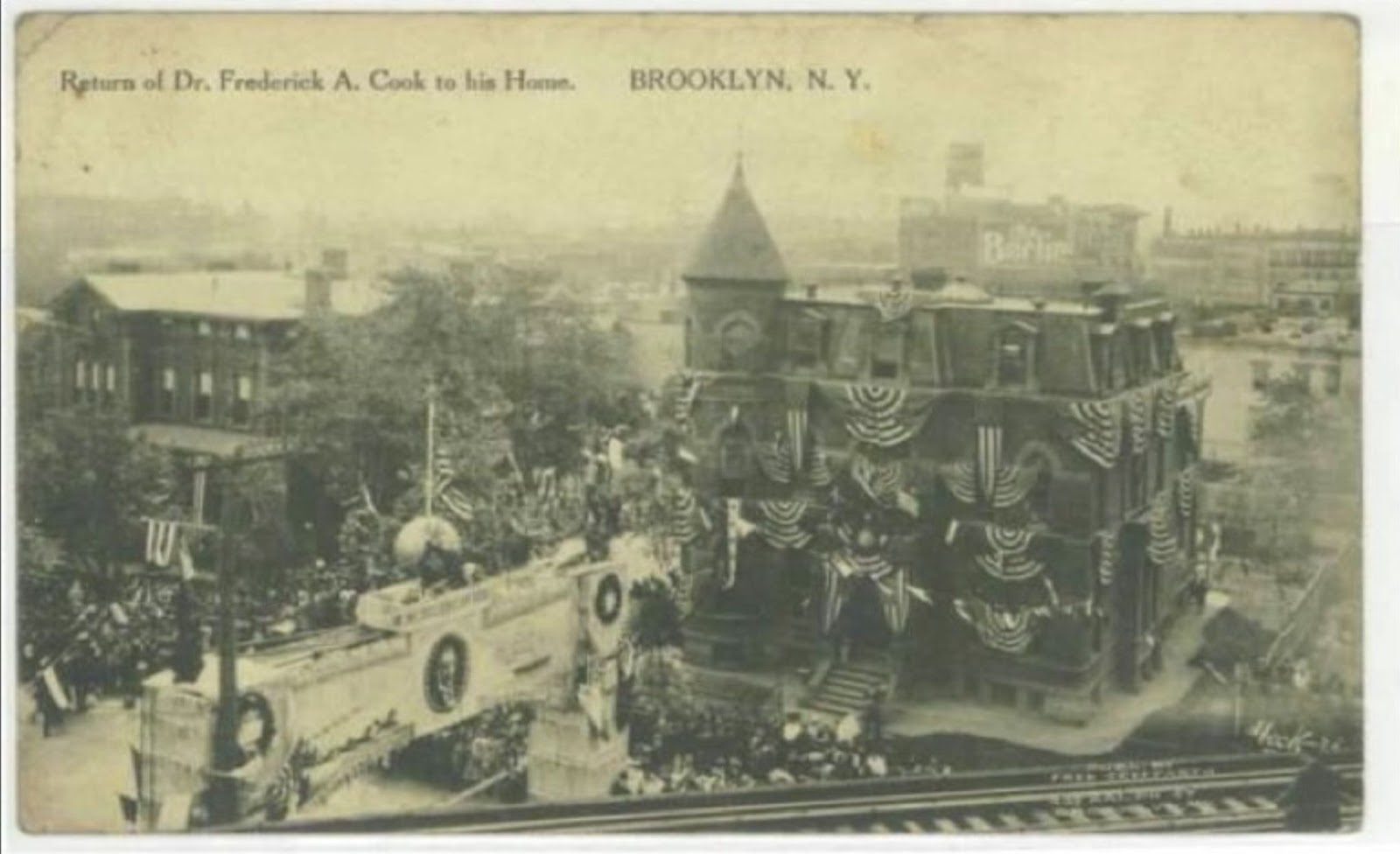
So today we can definitely say that Lipsius Cook’s house is not only a masterpiece of anachronistic architecture, but also a fascinating story. Many scandals and intrigues that took place behind these walls are known to have survived, making the history of the building very interesting and even intriguing. Its former residents and owners also made their contribution.
But first things first.19 The history of this house began in 1889.20 It should be noted that the Lipsius Cooke Mansion was and is also known as the house of Catherine Lipsius and Dr. Frederick A. Cooke. After becoming a widow, Catherine ordered the construction of this house on an undeveloped plot of land between Bushwick and Willoughby Avenues. It was at the end of the nineteenth century that the widow Lipsius ran the Claus Lipsius brewery.
It should be noted that at that time, emigration from the European continent to the North American continent, or more specifically to Brooklyn, was very popular. Several factors contributed to this, but one of the main ones was the European Revolution of 1848. As a result, thousands of Germans came to New York and settled in Bushwick. Logically, these people brought with them their own traditions and customs, one of which was German brewing.
This activity quickly became the main local industry. Thanks to the fact that Brooklyn at that time had at its disposal a remarkable supply of fresh water in the surrounding lands, equally excellent and favourable logistical connections, both by rail and water. It also had a large and ever-growing pool of labour thanks to immigrants. This business flourished.
One of the many breweries that grew like mushrooms after a rain in Brooklyn in the late nineteenth century was the Claus Lipsius Brewing Company. It was located at 471 Bushwick Avenue. The founder of the company was Henry Klaus, who did it in 1865. Seven years later, the man unfortunately died. His German wife, Kateryna, did not grieve for long. She remarried Rudolf Lipsius.
Design and construction
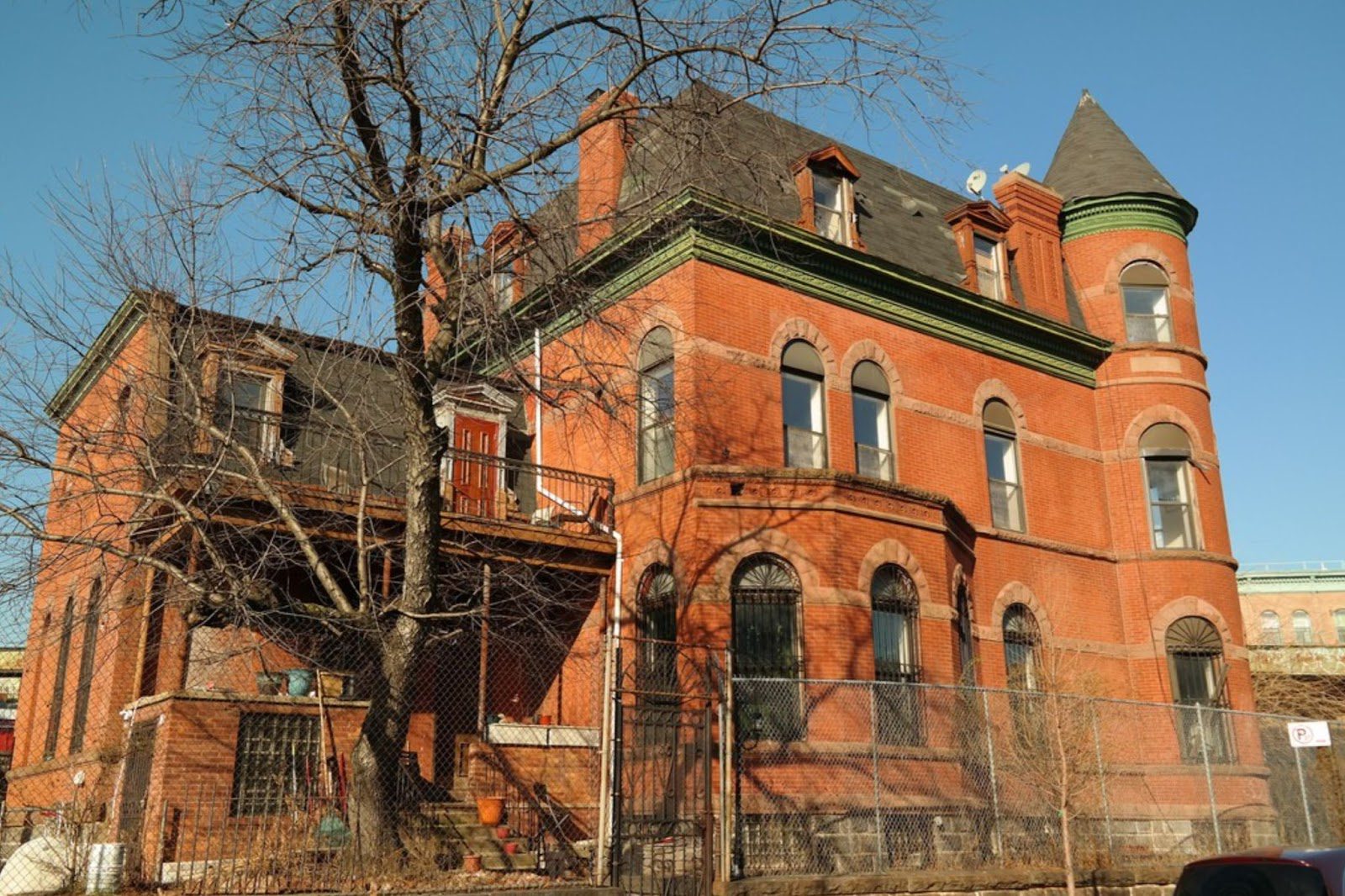
Kateryna’s new husband did a lot to make the brewery profitable. He began to expand it and paid much attention to the work of new branches. But in 1882, her husband also died, leaving Catherine a widow for the second time. After that, the woman took the helm herself. She took over ownership of the company and ran it until her son, Henry, grew up and was able to run the business on his own.
As for the Lipsius Cooke building itself, its construction was completed in 1890. After that, Catherine Lipsius moved into her new home with her four children. But a few years later, in 1902 to be exact, they sold the house to Dr. Frederick A. Cook. He was an Arctic explorer. There is a famous story about his statement that it was he, Cook, and not Robert Peary, who was the first to reach the North Pole, a year ahead of the latter.
Later, in 1920, the owner of the mansion became the Italian Giuseppe Giambalvo, who settled in this building with his family and lived here until 1952. It was then that Lipsius Cook’s house was sold to the local branch of the Roman Catholic Christian organization Daughters of Wisdom. This religious organization moved to New York from France in the early twentieth century. After that, the building changed hands twice more. First, in 1960, it was purchased by Dr. Clement Davis, and the current owners did so in 2000.
The building was designed by Theobald Engelhardt. The man was a native of Brooklyn. He was also a renowned architect and a well-known figure in the local German community. It is not at all surprising that Theobald Engelhardt was later commissioned to design a number of other important buildings in the Borough. Among them are the William Ulmer Brewery complex and the Eberhard Faber Pencil Company.
American-style mansion
The building was constructed in a purely American style, as evidenced by the presence of round arches. Although, to be fair, this style originated in Germany between the 1820s and 1860s. Together with those fleeing the revolution, the style immigrated to the United States. Thus, this red brick building has a round tower with a height of three floors. The entrance lobby also stands out, which seems to be surrounded by round arched windows.
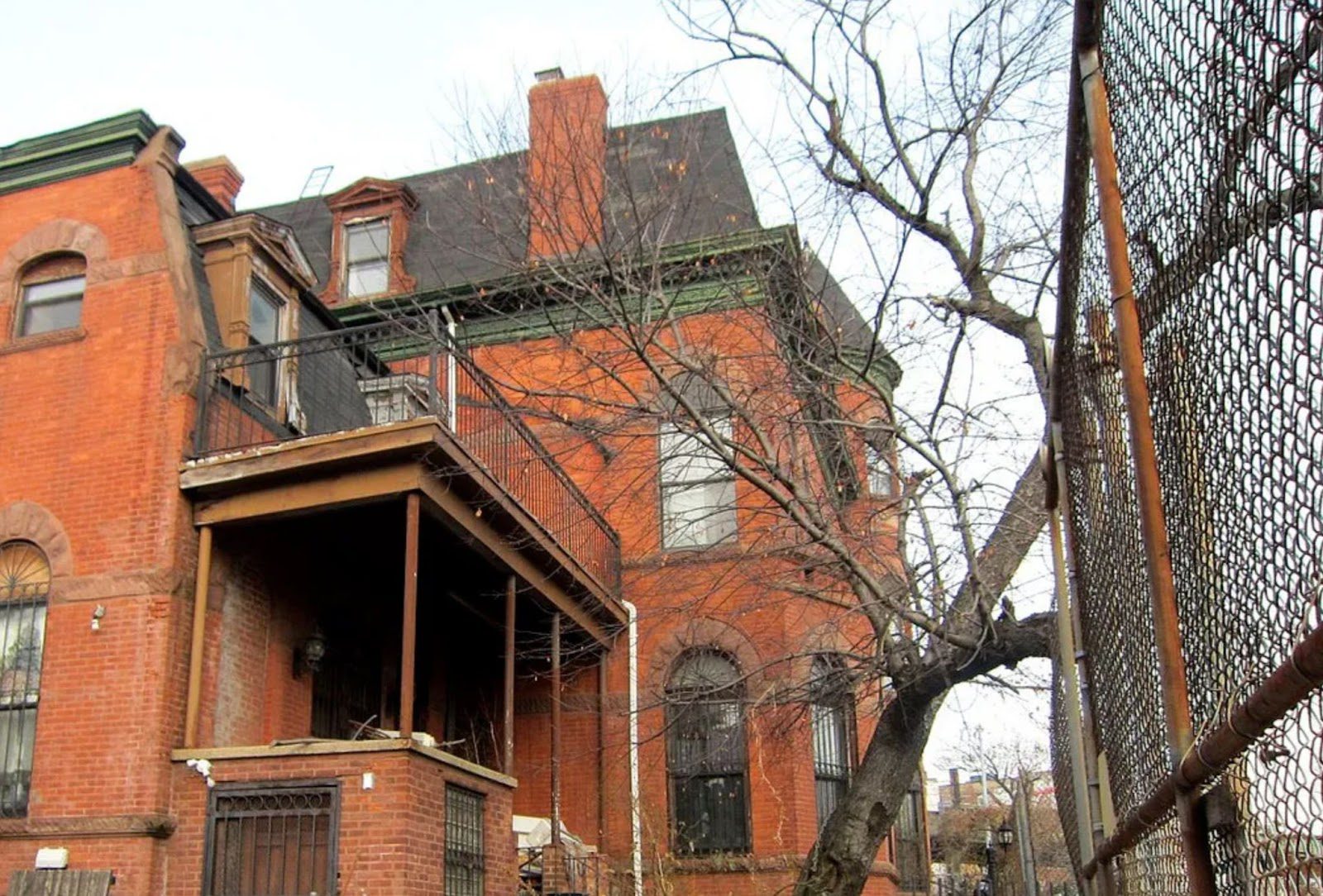
The cast-iron cornice that crowns the building looks special. An attic floor with dormer windows rises above it. In addition, the stone mouldings designed by the author, which were very roughly processed, give the mansion a real rustic, medieval look, which is known to go well with classical architectural elements. Today, access to the building is prohibited, but that’s okay, because you can admire it from all the surrounding streets.
More than 130 years after it was built, this unique mansion is very different from the gray square buildings that have appeared around it. Even rotten tiles, cracks on the facade, and colourful graffiti on the walls do not spoil the overall picture, although they do touch the heart.
Preservation of monuments
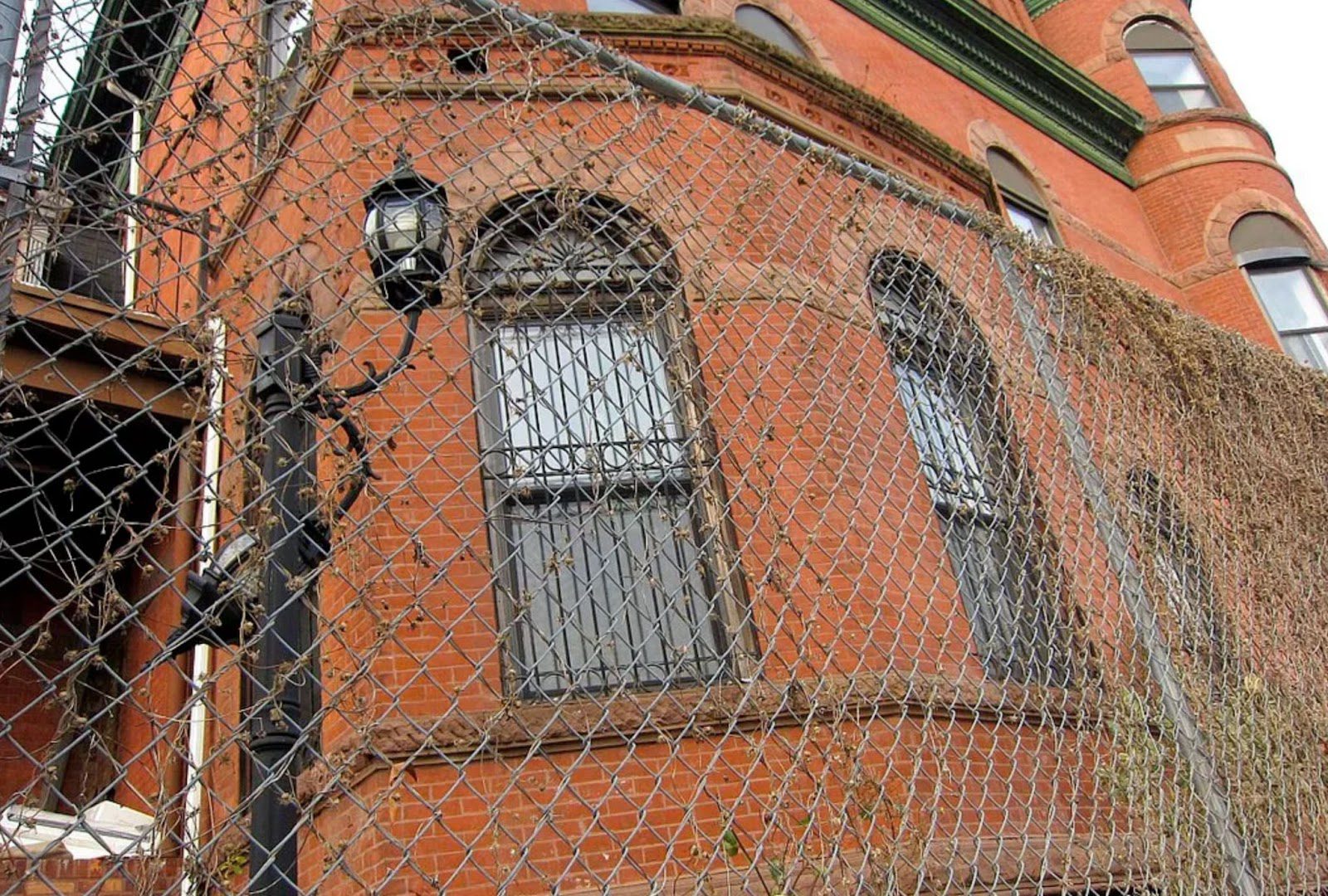
Be that as it may, the authorities do not disdain to take care of this house. Back in 2023, a spokesperson for the Commission for the Preservation of Architectural Monuments said that the agency was aware of the mansion’s sad state. Officials have been in contact with the current owner to discuss the next steps to address this critical situation. According to the New York City Department of Buildings, there have been for several historic preservation violations. The website of the Housing Preservation and Development Service has recorded as many as 13 complaints over the past few years. This means that activists are seriously concerned that the building will one day be demolished due to negligence.
People who are not indifferent argue that in order to save this architectural monument, great efforts should be made. The activists’ concern about the building’s fate is so serious that they even held a rally entitled “Historical Context Created by Underinvestment and Racial Discrimination.” One of the organizers was the Bushwick Historic Preservation Association.
The activists cite the creation of the First Historic District in May 2023 as a prime example of the preservation of architectural monuments in Bushwick. This district begins on the neighbouring Linden Street. It has become an example of how you can achieve your goals of historic preservation. Lipsius Cooke’s mansion is one of the 12 landmarks of the local community. In addition, the activists are ready to continue their struggle for the future life of local houses, for which they will continue to study the area for their availability and preservation opportunities.
Sources: