

What can have a greater impact on the overall atmosphere of the city, its mood and perception of guests than green areas? Especially those green areas that have a rich and long history. And they are not just a certain amount of green space, but also boast a built infrastructure of various kinds. This is exactly what the Brooklyn waterfront is today, along with the Brooklyn Bridge Park.
At different times in its history, this area has been a place of bustling commerce, a transportation terminal, a point of entry for immigrants, a center for art and activism. Finally, it is a world-class park visited by millions of people every year. Isn’t such a piece of infrastructure capable of creating and influencing the appropriate atmosphere? Read more on brooklyn-future.com.
Economic component
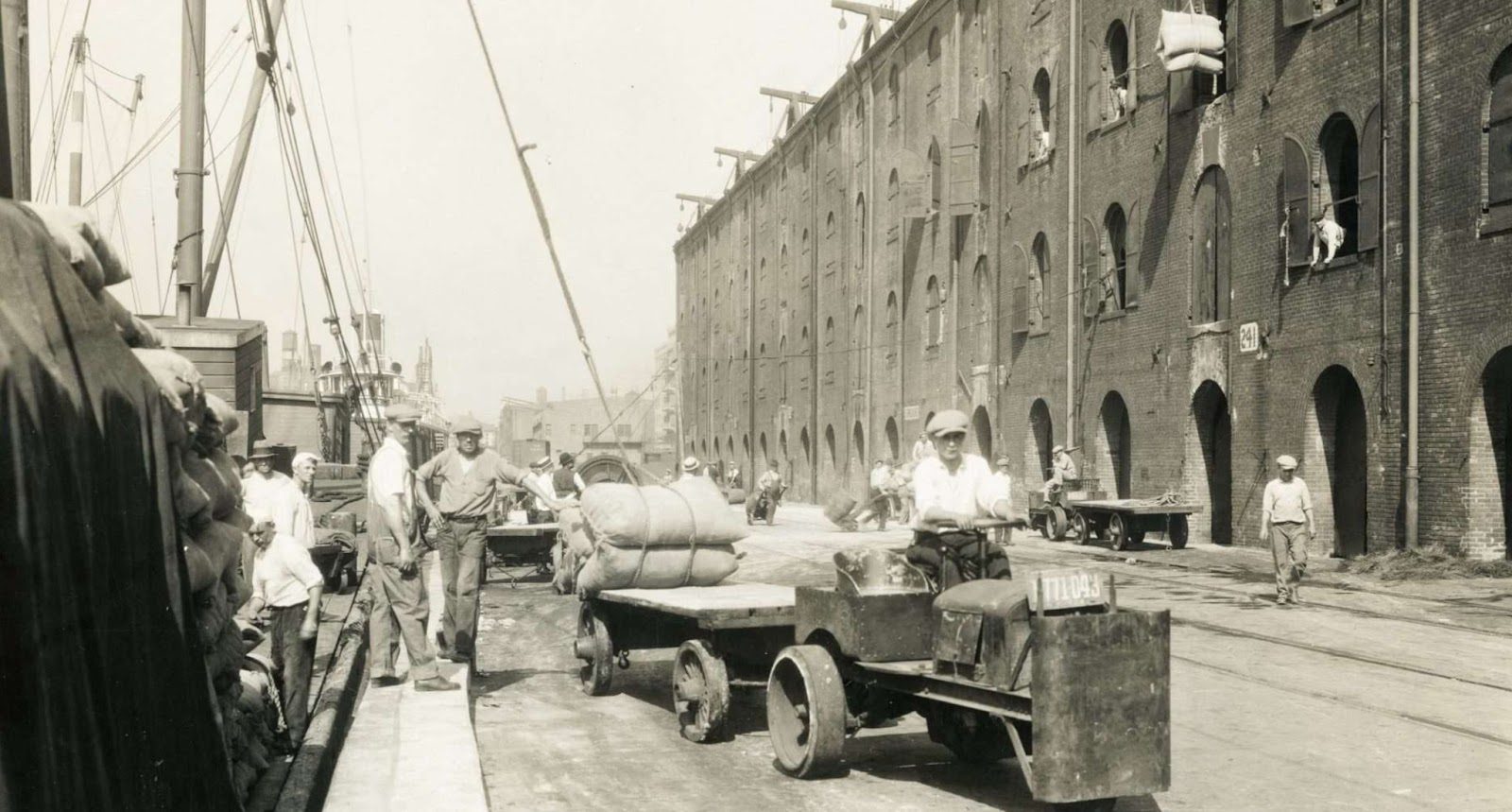
Since the mid-seventeenth century, the local East River has had a significant impact on the economic condition and development of Brooklyn. Boats and small ferries provided transportation of a wide variety of goods, which in turn contributed to the growth of the economy. Later, the railroad came along, launched in 1814 by Robert Fulton’s Fulton Ferry Company. It revolutionized trade between Brooklyn and Manhattan with its launch.
Already in the 1850s, massive brick warehouses were built along the ferry piers, and small piers protruded from the ground. Later in 1883, the Brooklyn Bridge was opened, marking the end of the ferry trade. It would seem that everything is perfect. If not for one thing.
The fact is that all these innovations led to a period of neglect of the Brooklyn waterfront. Then road transport came to the aid of the railroad. Already in 1950, the Brooklyn-Queens Expressway was built. At the same time, the narrow finger piers were replaced with wider ones, which were able to accommodate larger ships and, accordingly, more cargo. All this revived the area for a while.
However, already in the 1970s, a significant part of Brooklyn’s waterfront was almost completely inoperable and unnecessary, and, as a result, abandoned. In 1984, after the closure of cargo operations, the Port Authority announced plans to sell the piers for commercial development.
These plans provoked a large-scale public movement to return the embankment to public use. At the same time, a multi-year civic movement was launched to support the park. This broad grassroots campaign received support and financial assistance from city officials. What was really nice was that all these activities were initiated by local residents.
Construction of the park
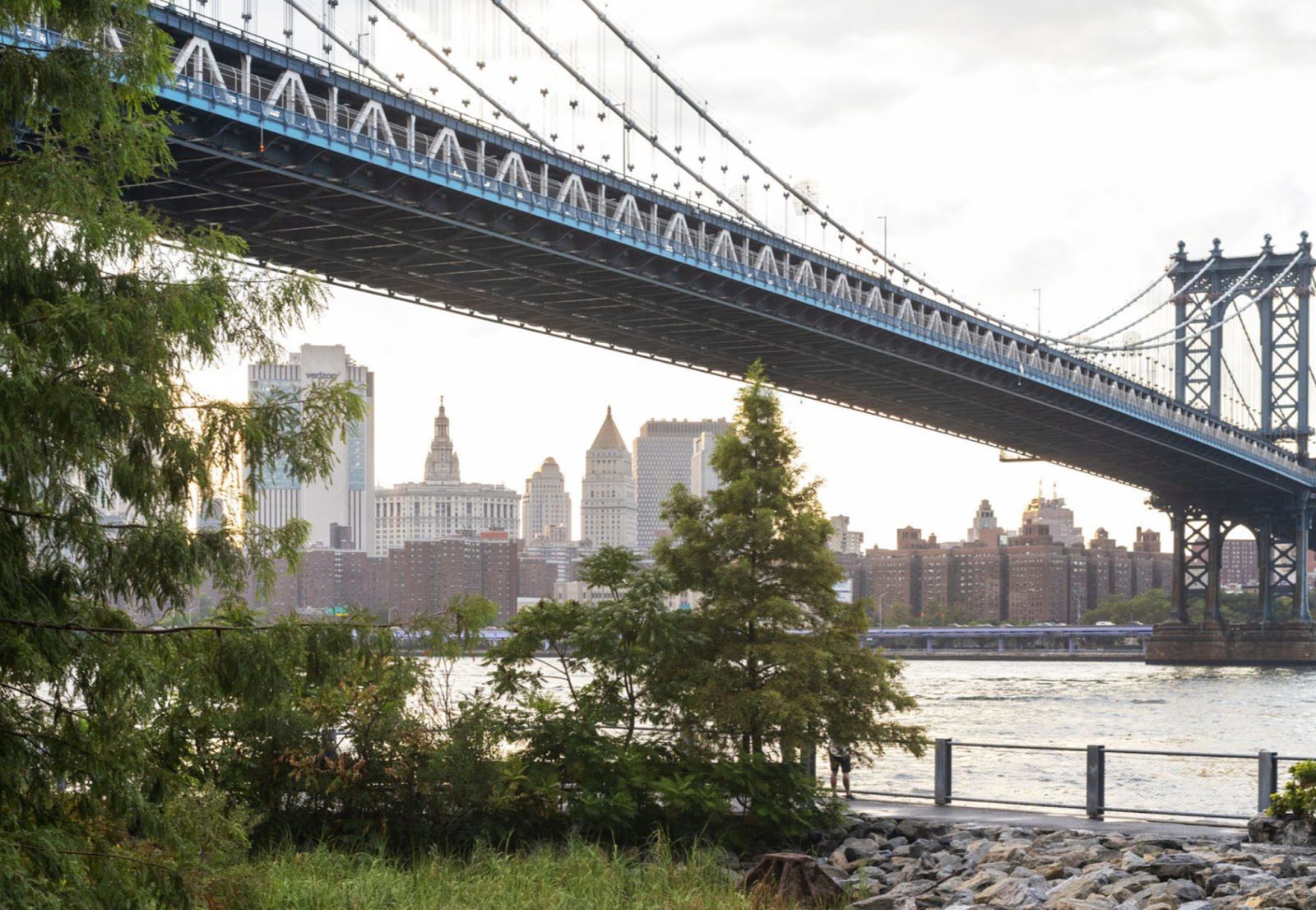
Therefore, we can say that the Brooklyn Bridge Park is the result of extensive planning and public advocacy over many decades.
In 1998, the Downtown Brooklyn Waterfront Local Development Corporation was formed. As a result, an Illustrative Master Plan was developed in September 2000, which demonstrated the concept of a new waterfront park.
A Memorandum of Understanding was also adopted, which stipulated that the park would be financially self-sufficient in maintenance and operation, and that long-term financing would be provided by the development.
In 2004, the landscape architects Michael Van Valkenburgh Associates were hired to prepare a master plan for the park. A year later, it was published and approved. Despite several changes, namely in 2006, 2010 and 2013, construction began in 2008. This is the story of creating a specific Brooklyn atmosphere around the local waterfront.
As planned, the park is currently operating in accordance with the original plans and requirements for financial independence and self-sufficiency. Although some funds still have to be raised. It is about the operation and maintenance of the park. But the bulk of the money comes from the development of the park’s plots.
Development program
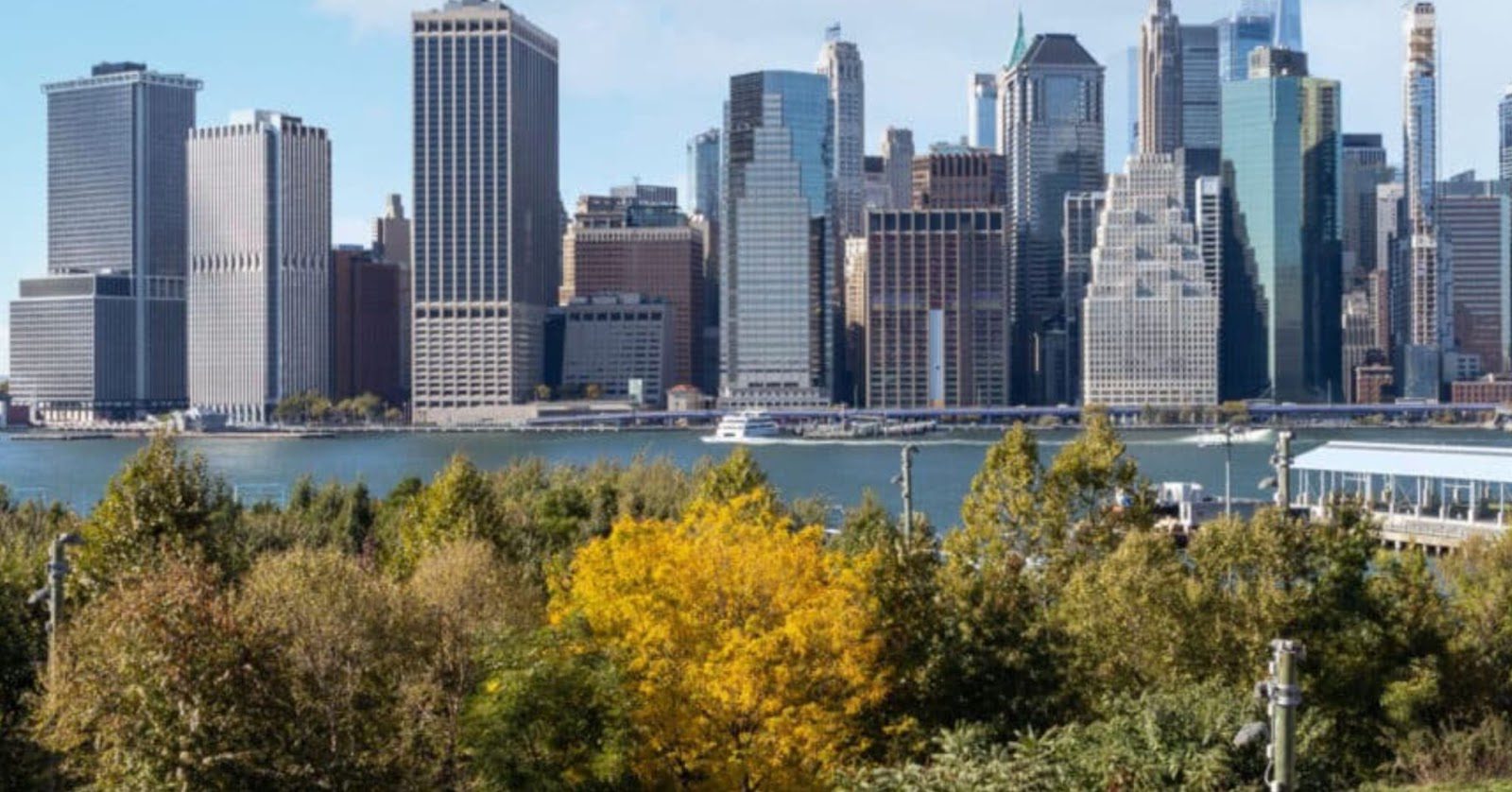
The park’s development program was implemented after an in-depth analysis was made. This made it possible to find out how to generate sufficient income to support the park’s activities, minimize the size of the building, and combine the use of not only the surrounding park, but the entire district. In other words, we are talking about creating exactly the kind of atmosphere that would allow not only to earn money, but also to enjoy walking along the embankment.
Currently, plots for construction have been allocated.24 For example, John Street, which runs on the northern edge of the park, is located on the 25th Street. It was planned to build a residential complex, which includes more than 50 residential units with a total area of 96 thousand square feet, 2.6 thousand square feet of retail space on the first floor and 1.75 thousand square feet of cultural space.
Construction began in the summer of 2014 and was completed two years later, in 2016. As for the cultural space, the first floors were originally occupied by the Brooklyn Children’s Museum. Now the Brooklyn Public Library is located here.
In addition, local shops and tobacco warehouses were developed. The total area of the warehouses is 350 thousand square feet. These warehouses were built back in the nineteenth century.44] They were mainly used to store products, such as coffee. They were closed for more than 50 years due to the deterioration of the buildings.
When starting the reconstruction, it was decided to try to combine commercial, retail, and office uses. This would allow preserving and utilize the unique character of these industrial buildings on the waterfront. As a result, the plan called for nearly 80 thousand square feet of restaurant and retail space, as well as 300 thousand square feet of office space. Construction and reconstruction began in early 2014 and was completed in June 2016.
Symbiosis of sustainable development and industrial heritage
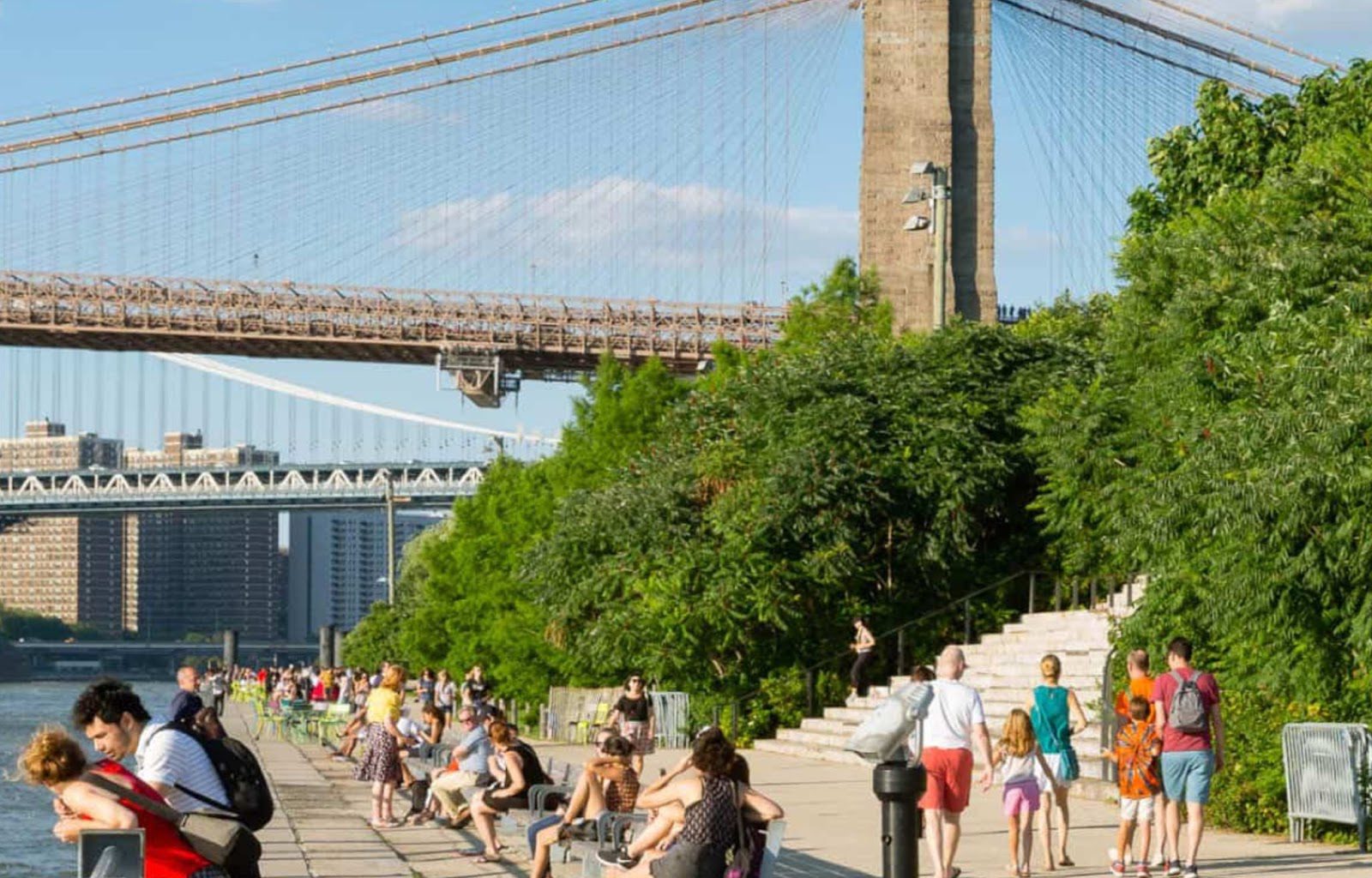
Today, Brooklyn Bridge Park stretches for 1.3 miles along the East River on the site of a now defunct freight transportation and storage complex. It stretches to two thriving neighborhoods, Brooklyn Heights and Dumbo. Offering picturesque views of the lower Manhattan skyline.10 With the new design, the authors wanted to transform the site into a flourishing urban landscape, while preserving the exceptional atmosphere of the industrial waterfront.
The former industrial site was ennobled with lush park lawns, young trees and beautiful flowers. All of this has allowed us to create a strong landscape and add green diversity to the former industrial site. The transition between the park and the adjacent neighborhoods at key entry points is provided by so-called “urban crossings”, through which the public has access to the long and narrow street.
Thus, the park significantly diversifies the industrial embankment, which was previously mono-functional. In addition, unlike other waterfront parks where visitors do not come into contact with the water, this park encourages close interaction with the water surface. There are various types of shorelines, boat ramps, and beaches that create a special atmosphere of the New York Harbor and Brooklyn.
As you can see, sustainable development is partially diluted by the concept of structural economics, namely, carefully coordinated design and existing structural conditions.
Sources: