

Wallabout Market was founded in 1884, at a time when Brooklyn was still an independent city. Located in northern Brooklyn, near Wallabout Bay and the Brooklyn Navy Yard, the market served the needs of local farmers. These farmers, frustrated with the limited capacity and inconvenient locations of New York City’s wholesale markets, sought a more efficient alternative that would free them from reliance on markets across the river.
More details on the history of Wallabout can be found on brooklyn-future.com.
Farmers Needed a Market
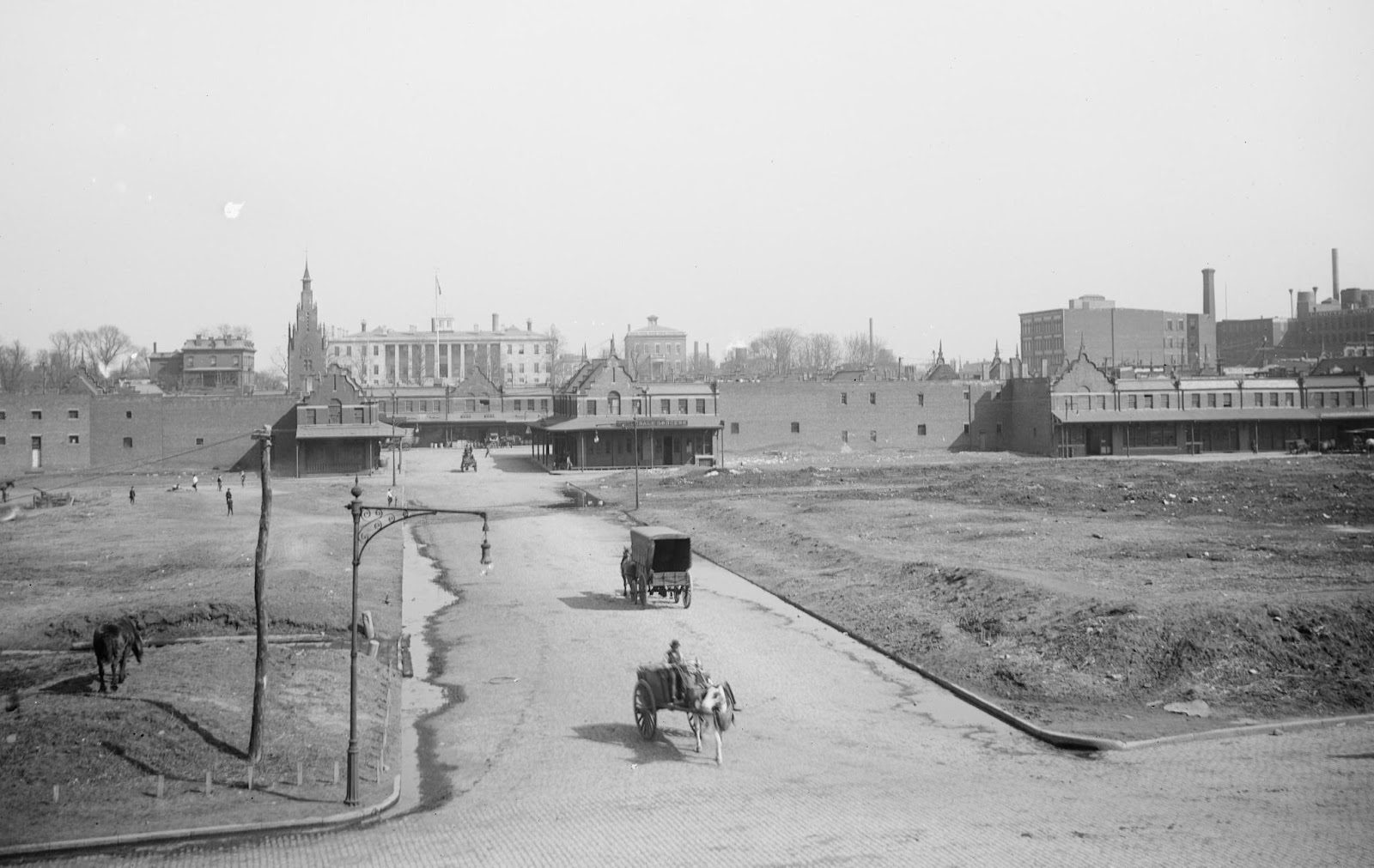
While Brooklyn was a densely populated and industrialized city, much of Kings County remained agricultural well into the early 20th century. The towns of Flatbush, Flatlands, New Utrecht, and Gravesend were primarily inhabited by farmers, whose crops helped feed the growing urban population.
Despite the short physical distance between farmers and consumers, the journey of agricultural goods from Kings County to Brooklyn’s tables was surprisingly long and complicated. With no sufficiently large produce markets in Brooklyn, local farmers had to transport their goods to Manhattan, where they sold them to wholesalers. These wholesalers then resold the products to Brooklyn grocers, who had to transport them back across the river, resulting in wasted time and higher prices due to additional costs.
By 1884, dissatisfaction with New York’s wholesale markets reached a breaking point. Instead of making the trek to Manhattan, farmers from Kings County began parking their produce carts along Fulton Street in Brooklyn.
Soon, hundreds of carts stretched from the Brooklyn Bridge to the ferry terminals. Local residents complained about the stench and garbage left behind, while farmers themselves were unhappy with the lack of an organized marketplace.
In response, the farmers formed the Farmers and Gardeners Association to collectively advocate for a permanent trading location. Their persistence paid off: in the fall of 1884, the commissioner of the Brooklyn Navy Yard ordered the farmers to move their stalls near the shipyard, away from Fulton Street. Soon after, the Navy Yard leased land around Wallabout Basin to Brooklyn, providing a designated marketplace.
The city drained and leveled the land, constructed streets, sewer systems, water lines, gas lines, and electric lighting, and built a 104,000-square-foot market capable of accommodating 400 farm carts. Eventually, the federal government sold the land to the city, ensuring a long-term solution for Brooklyn’s farmers.
The Work of Architect William B. Tubby
As Wallabout Market continued to expand, Brooklyn’s city government decided it was time to construct a proper, permanent market—one that reflected the grandeur of the city’s architecture.
To design it, officials hired William B. Tubby, one of Brooklyn’s leading architects. His strong connections—particularly his friendship with Charles Pratt, Brooklyn’s wealthiest man and a major landowner near the market—likely helped him secure the project.
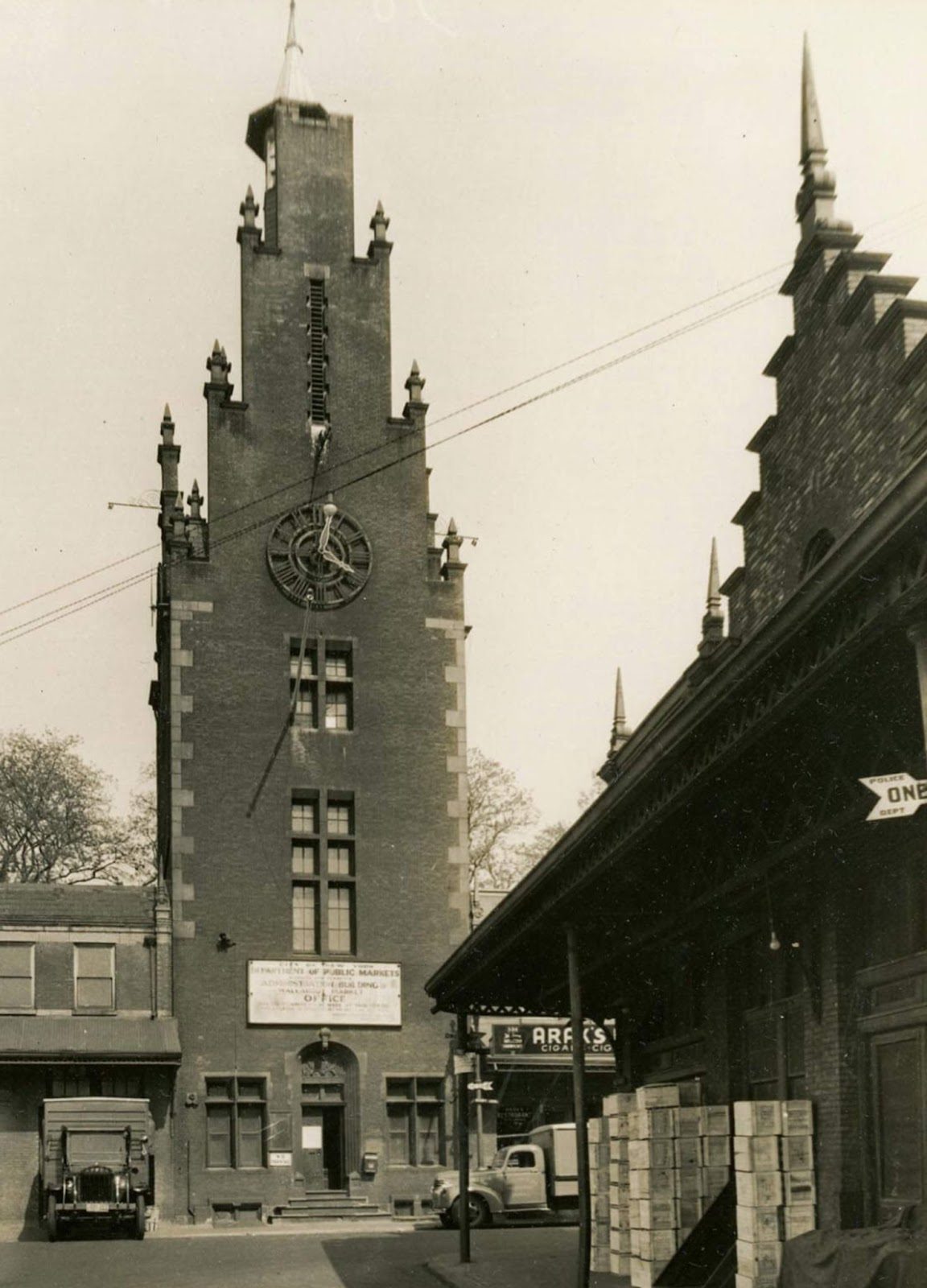
Rather than simply building rows of functional brick stalls and two-story warehouse buildings, Tubby envisioned something greater. Drawing inspiration from Brooklyn’s Walloon and Dutch heritage, he designed an entire village of uniform brick buildings, arranged around a central marketplace.
Each building featured stepped Flemish gables, decorative spires, and intricate brickwork. The market covered four streets extending from Flushing Avenue to the waterfront.
Construction of the new Wallabout Market took place between 1894 and 1896, culminating in a grand opening celebration.
At the heart of this architectural “village” was a magnificent clock tower with a conical spire, its ziggurat-style façade echoing the surrounding rooftops.
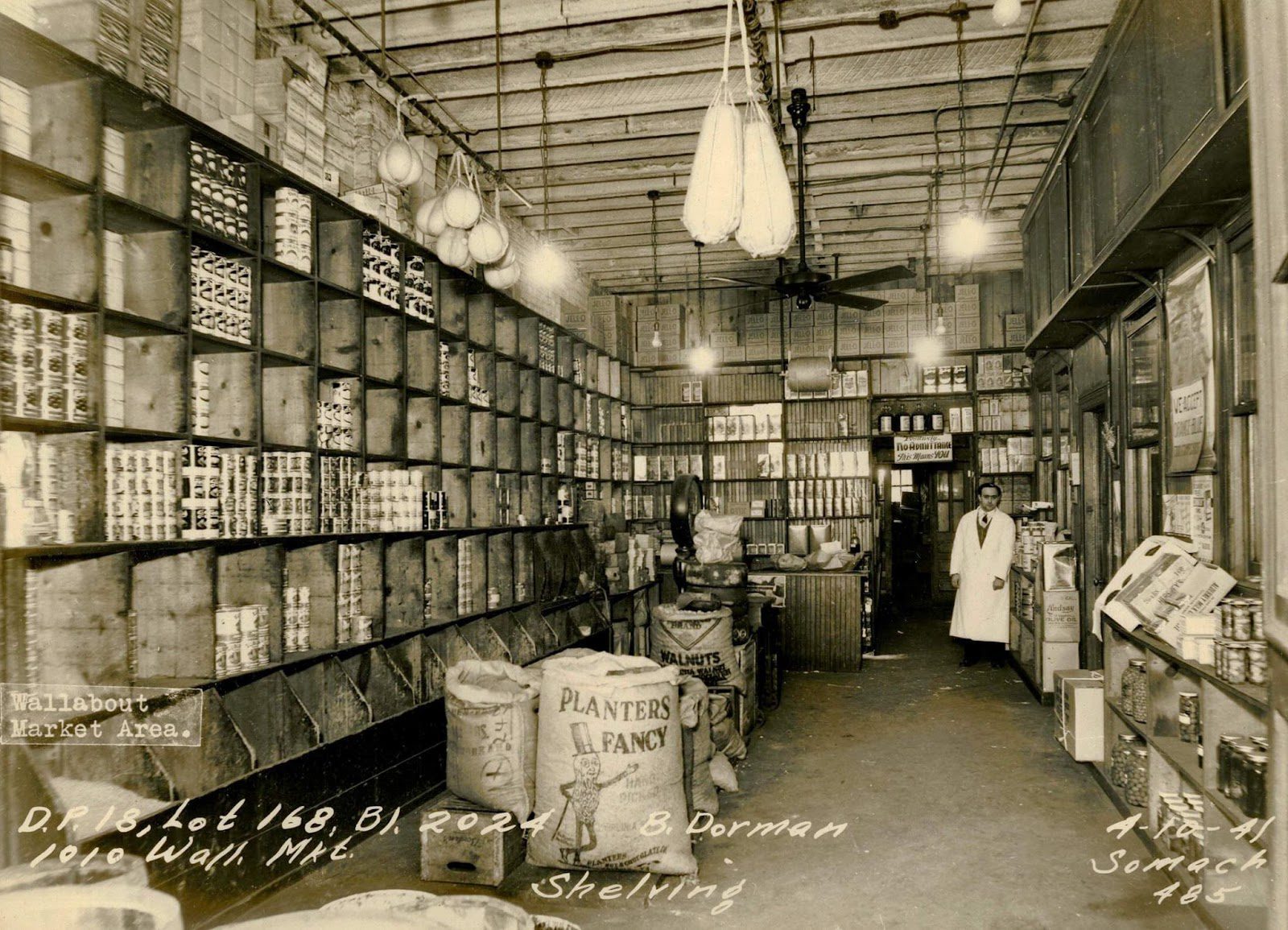
The market’s buildings housed retail stalls, each equipped with wooden awnings to shield vendors from the elements. While most merchants were wholesalers, the area around the clock tower featured retail stalls, offering meat, dairy, seafood, fresh produce, and even flowers and plants.
The Hidden Side of Wallabout Market
Wallabout Market’s prime location along the waterfront allowed for efficient transportation of goods by both land and sea.
However, behind the bustling trade and lively atmosphere, the market had a darker side.
Wallabout Market was a ruthless business—not just for those selling goods but also for those profiting through illegal means.
Over the years, the market was plagued by theft, bribery, and corruption. Thieves stole produce from farmers’ carts, while criminals targeted exhausted farmers returning home after a long day of work.
Many vendors were robbed, and some even lost their lives. One particularly tragic case involved a farmer from Jamaica, Queens, who was murdered near his home after leaving the market.
Despite these challenges, Wallabout Market thrived, handling both local produce and perishable goods shipped from across the country.
With the advent of refrigerated rail transport in the late 19th century, fruits and vegetables could now be shipped over long distances. This reduced New York City’s reliance on regional farms, and by 1885, the American South had become a major supplier to Brooklyn’s markets.
As Brooklyn’s population and demand for fresh food increased, the city expanded Wallabout Market, adding a water transportation canal in 1891.
Private investments also enhanced the market’s infrastructure, including refrigerated warehouses and railway facilities, allowing refrigerated train cars to deliver perishable goods directly to cold storage facilities.
By the early 20th century, Wallabout Market had become the only market in the U.S. with direct railway access.
World War II and the Market’s Demise
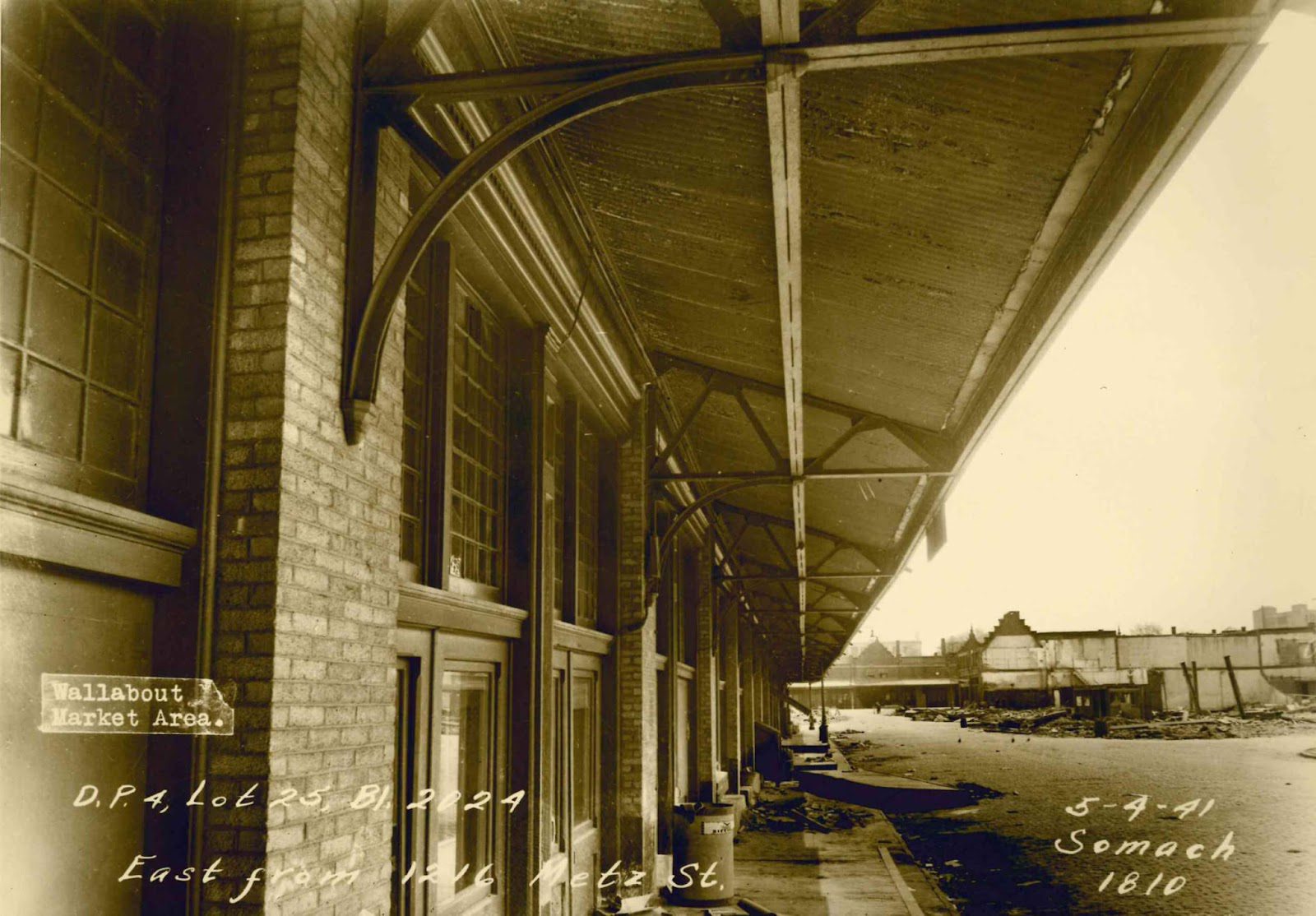
Wallabout Market operated until its closure in 1941.
Ultimately, the market fell victim to World War II and the Brooklyn Navy Yard’s expansion.
During the war, the Navy Yard needed additional space for shipbuilding, and securing its perimeter became a top priority.
Wallabout Market was too exposed, and concerns about spies and saboteurs ran high, as Brooklyn Navy Yard was one of the U.S. military’s most important naval bases.
As a result, the market was immediately demolished, with bulldozers leveling the entire site.
There was no effort to preserve any part of it—not even the iconic clock tower.
In its place, military factories were constructed to produce war materials and ammunition.
Wallabout Market’s Legacy
Although Wallabout Market was lost to history, its impact on Brooklyn’s development remains significant.
It symbolized Brooklyn’s role as a crucial supplier in New York City’s food distribution chain.
Today, the former site of Wallabout Market is part of the Brooklyn Navy Yard, a thriving industrial hub that continues to shape Brooklyn’s economy.
While nothing remains of the once-bustling market, its legacy lives on in Brooklyn’s rich history of trade, commerce, and architecture.